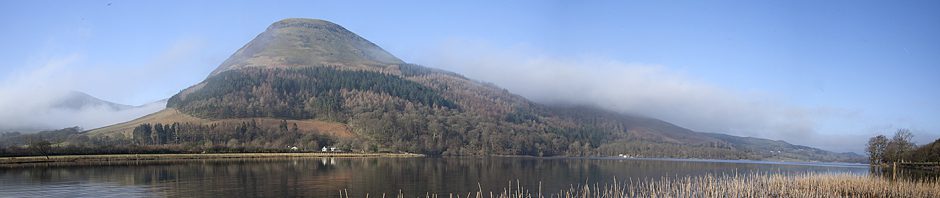
Curlew Volunteer Evening at the Yew Tree Hall Monday March 9th at 7-9 pm.
Click the link below to see the poster.
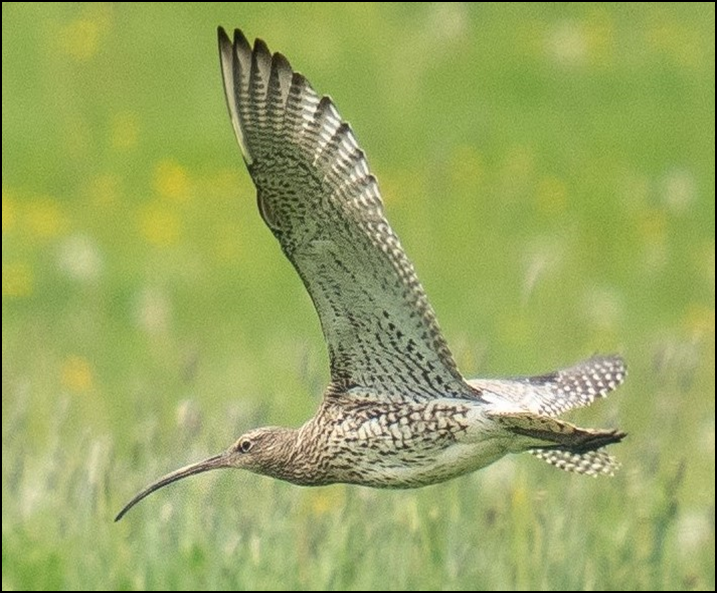
Photo by Christian Proctor
Curlew Press Release – October 2025
For many years we have heard the haunting call of the curlew in the Lorton Valley and beyond, signalling that spring is upon us and the circle of life is kicking into action again. Sadly though, curlew numbers have plummeted to such an extent that they are now on the Red List on the UK Conservation Status Report and require us to take urgent action to stop them becoming extinct.
Curlews are the largest wader in the UK and can live up to 30 years old. They tend to spend the winter in the estuaries and mudflats, coming to the grasslands in spring to breed. They are ground nesters, and in our area, tend to nest in silage fields, crop fields and open moorland. Their decline is due to a number of factors including:
- habitat loss
- agricultural practices, such as early rolling and cutting of grass leading to direct loss of eggs and chicks
- abundant predators, such as carrion crows, badgers and foxes
In late January 2024, a group of residents and farmers in the Melbreak area got together to help the curlews with our own Melbreak Curlew Recovery Project. There are several Curlew Recovery Projects in the UK so we have been able to learn from others, particularly the South Lakes Project.
The Group submitted a funding application under the Farming in Protected Landscapes (FiPL) scheme to Lake District National Park (LDNP) for protective and monitoring equipment, such as electric fencing, cameras, posts, telescopes, binoculars etc. The application was successful and provided the team with enough equipment to protect 9 nests. Without this grant, the project could not have taken place.
The hunt for curlews began in March, with small surveillance teams covering Mockerkin, Fangs Brow, Loweswater, Lorton, Stanger, Rogerscale and Southwaite. We had help from local residents, including many farmers, reporting where they had seen or heard curlews – a real community effort.
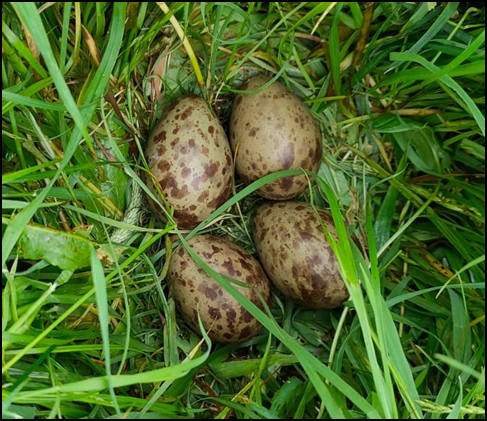
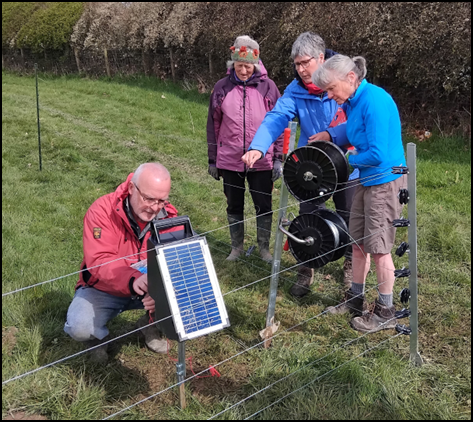
A fencing team was established (seen above practicing), with members of this team travelling to Kendal to learn how to erect the fencing. The fencing protects the birds from predators such as badgers and foxes, and provides the farmers with a boundary to work up to when ploughing fields etc.
During April and May, nest-finding started, and permission was sought from local farmers so that we could enter their land. The team found 4 nests, which was an excellent result for the first year. Each nest contained 4 eggs, the typical curlew brood size.
After securing the agreement from the landowners/farmers, without whose support the project could not have continued, electric fencing was erected together with monitoring cameras.
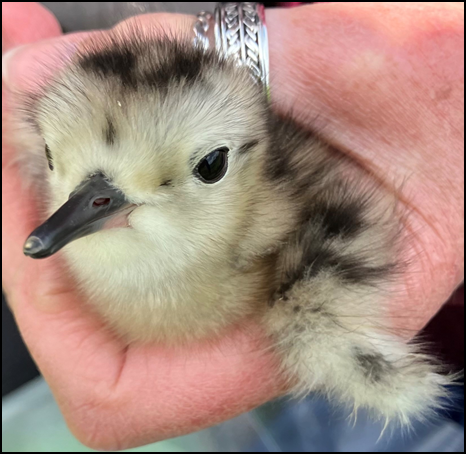
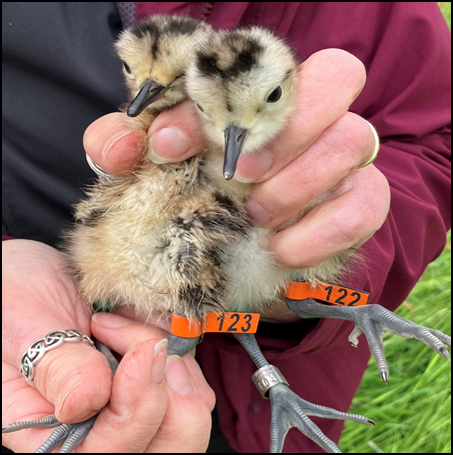
11 chicks hatched from the 4 nests, and were ringed by local British Trust for Ornithology expert Thalia Sparke. The chicks photographed here were from the Lorton area. Without the protective work of the Group, it is highly probable that none of the nests would have survived long enough to allow hatching. Fledging takes 5-6 weeks, after which the birds head for the coast for winter.
The group is sure that there were several curlew nests in our area which were not found and protected this year. Next year, with the benefit of experience, we hope to find more nests, but we do need more volunteers so we can protect as many of these wonderful birds as possible. We would also love to hear from any local landowners, whether or not their fields are farmed, who would like to get involved in the Project – please contact Diana Clarke (diana.clarke2@googlemail.com) or David Gardiner (davidj.gardiner@btinternet.com).
There is a wealth of information about the plight of curlews, and the actions being taken to assist their recovery on the Curlew Recovery Partnership website
Cathy Lee and David Gardiner
Melbreak Curlew Recovery Project is a Melbreak Wildlife Group initiative, supported by The Melbreak Communities

 The Melbreak Communities