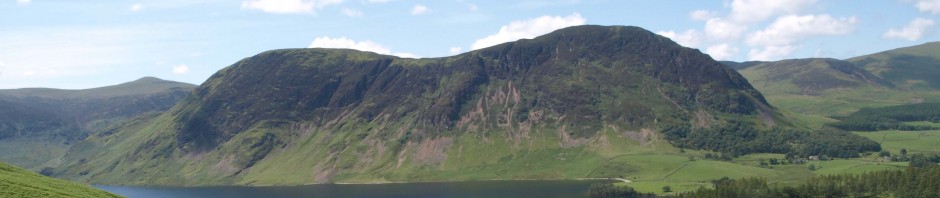
Welcome to Lorton Parish Wildlife homepage
Lorton Parish covers over 22km2 and supports a wealth of wildlife. On your travels around the Parish, do keep a look out, there is plenty of wildlife that you can spot if you simply pause a while, and take the time to quietly look and listen.
Between March 2021 and March 2024, 322 different species were recorded as part of the ‘Lorton Fauna and Flora’ i-naturalist project. Red squirrel, hedgehog and yellowhammer were the three species most recorded – and these species were seen within the village of Lorton itself.
If you would like to add your wildlife sightings to the project, please visit the i-naturalist project page, search for ‘Lorton Fauna and Flora’, and join our group. Information about i-naturalist and how to join can be found here.
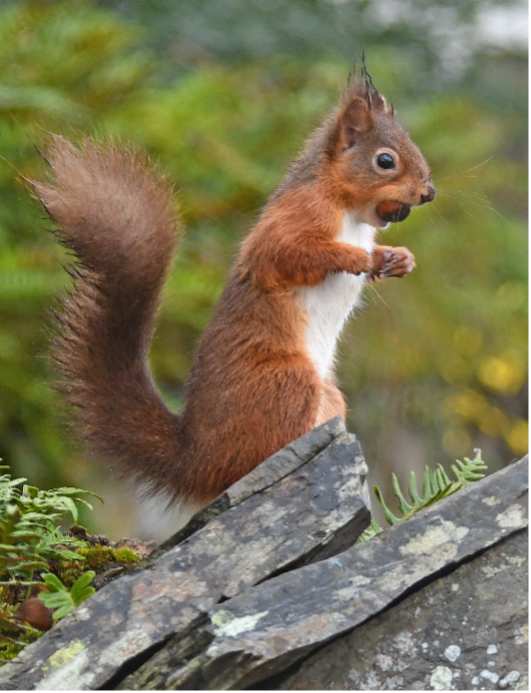 Red squirrel, Lorton © Stuart Medland
Lots of flora and fauna can be spotted on the many footpaths and quiet lanes that criss-cross the Parish. More information on walks and where to see wildlife and discover nature for yourself, can be found here
Wherever you go, please make sure you follow the countryside code, stick to footpaths, keep dogs under close control, and take care not to disturb wildlife, especially if it is nesting or has young.
Sadly, wildlife is disappearing from our countryside and gardens at a rapid rate. Red squirrel populations have plummeted from 3.5 million to around 278,000 nationally. Research suggests that there are less than 1 million hedgehogs left in the wild, and curlew is one of the most rapidly declining breeding bird species is the UK, showing a decline of 48% between 1995 and 2015, according to the BTO. Whilst all of these species have recently been recorded in the Parish, they are under threat of extinction nationally. By working together with people in our community – residents, farmers and landowners, and with a wide range of organisations, we hope to protect and safeguard the wildlife populations of Lorton Parish into the future.
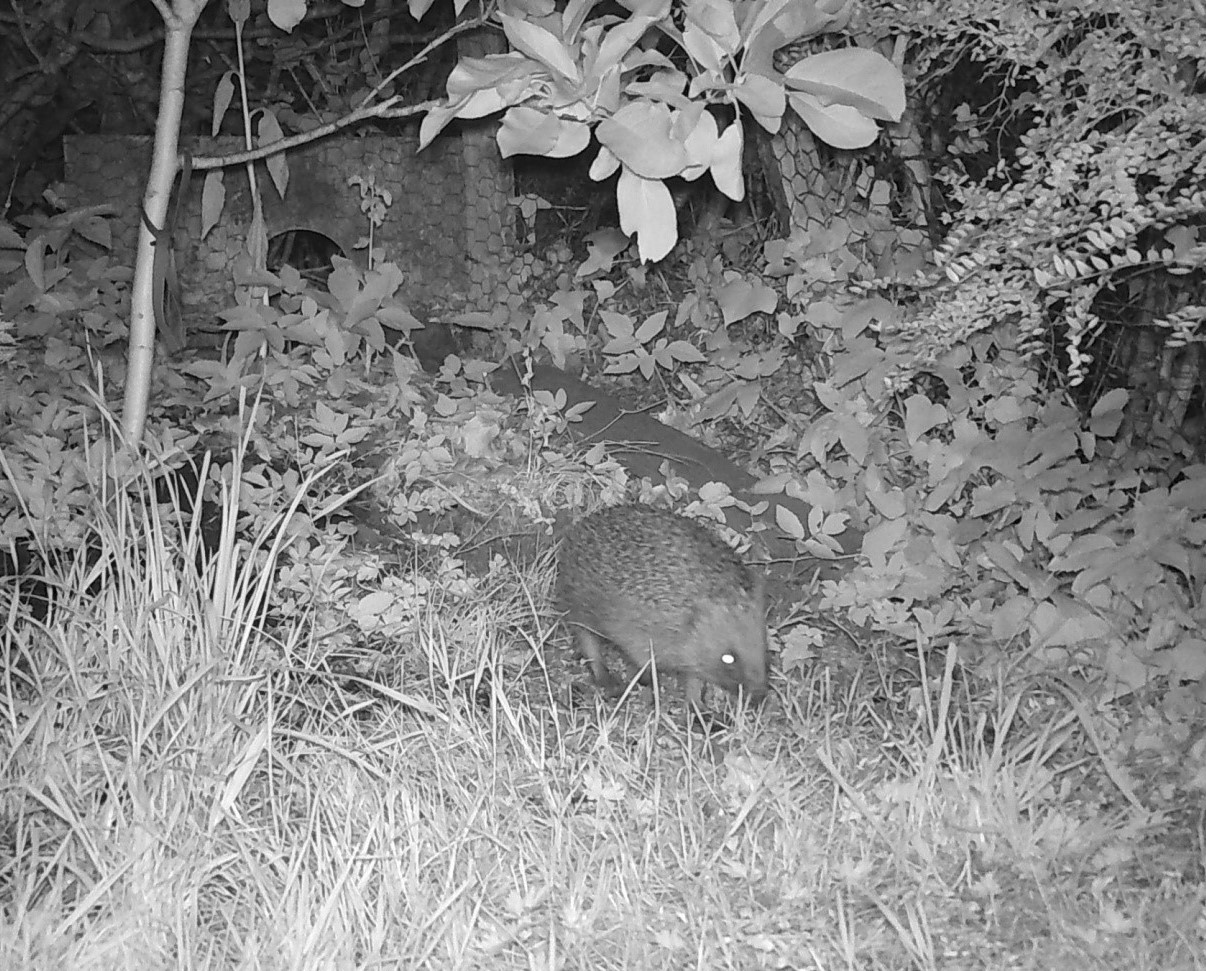
Night camera footage of hedgehog in Lorton accessing a garden via a hedgehog highway. April 2024. Photo © Tanya St. Pierre
Here are some of the projects and activities that are happening in Lorton and the wider Melbreak area to support our local wildlife, you can find out more by clicking on the links:
- Lorton Wildflower Project
- Melbreak Wildlife Group
- Melbreak Swifts
- Melbreak Hedgehogs
- Melbreak Barn Owl Group
- St Cuthberts Eco-church
- Lorton Parish Nature Planning
- River Cocker conservation
- Red squirrels conservation
- Dark skies initiative
- Himalayan balsam control
Wildlife in and around Lorton village: Flora and fauna
The parkland and surrounding lanes, footpaths and lonnings (ancient tracks) support a surprising variety of tall trees! Horse chestnut, cedar of Lebanon, copper beech, and Wellingtonia (Sequoidadendron giganteum) intermingle with native scots pine, larch, silver birch, beech, wild cherry, small leaved lime and sessile oak to provide a lofty canopy, providing ideal aerial corridors for red squirrel and nesting sites for birds such as kestrel, tawny owl and rook.
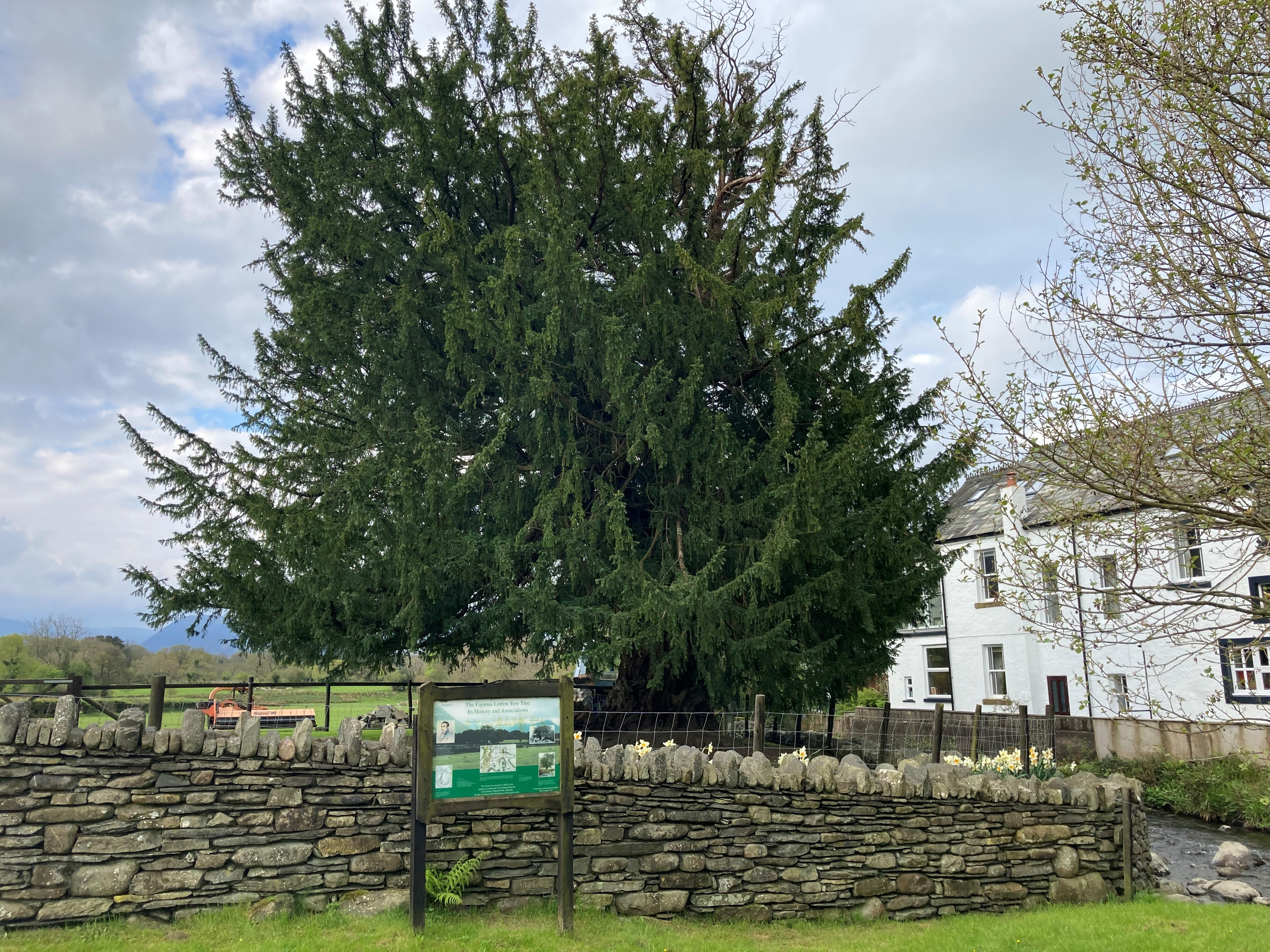
Lorton’s most famous yew, the ‘Wordsworth Yew’. Photo: © Tanya St. Pierre, April 2024
Lorton is famed for its yew trees, and these are scattered throughout the village. The most famous of all can be found behind Yew Tree Hall, in High Lorton, it is thought to be at least 1,000 years old. Not only are these ancient native trees magnificent and historical in their own right, their fruits are favoured by song thrush, blackbird, and fieldfare. Their dense canopy offers protection and nesting opportunity for birds including wren and goldcrest, and the leaves are eaten by caterpillars of the satin beauty moth, which is yet to be recorded in Lorton, but is found in locations nearby.
Lorton Wildflower Verge Project
The scattering of verges within the village are sensitively managed by the Parish Council as part of Lorton Wildflower Verge project Here you can see wildflower species that were once common in Cumbrian hay meadows, such as black knapweed, yellow rattle, red clover and ox eye daisy. Wild flower seed from the nearby Sandy Beck Meadows National Nature Reserve was collected with Natural England staff, and plug plants were planted with the help of Lorton Primary School and local residents. The nectar rich flowers and fine grasses attract a myriad of insects and pollinators. Look out for grasshopper, bilberry bumblebee, peacock butterfly, ringlet and meadow brown butterfly that have all been sighted feeding on wildflowers and grasses on the verges in Lorton.
Hedgehogs, frogs and toads make good use of the tall grass left along the hedgerows and boundary edges as corridors, as they travel throughout the village. Do look out for them and take care to avoid them when driving by car.
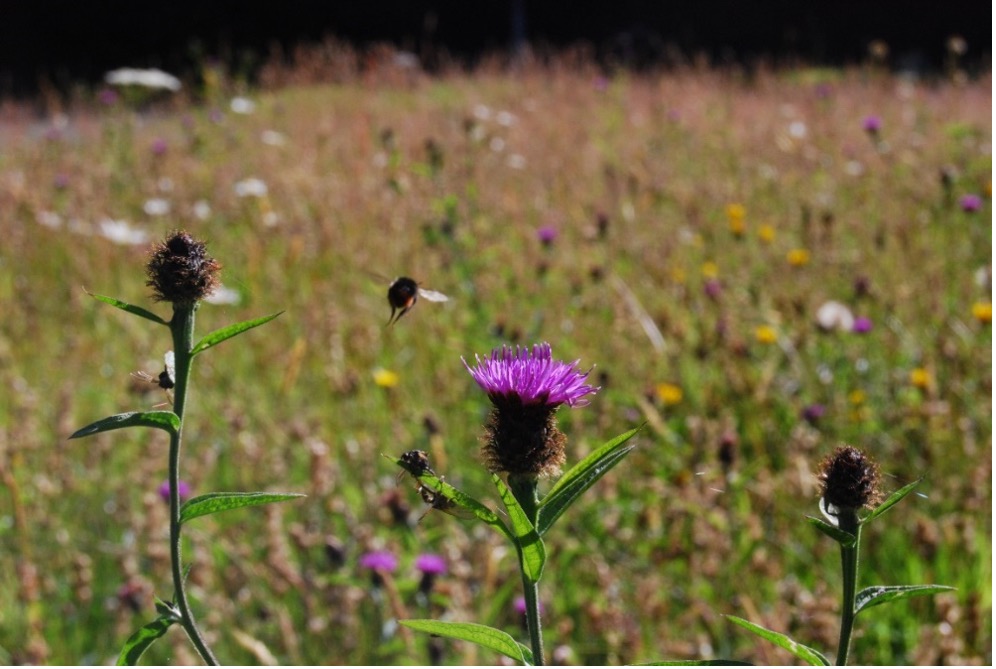
Crossgates crossroads wildflower verge, Lorton. Photo: © Tanya St. Pierre, July 2022
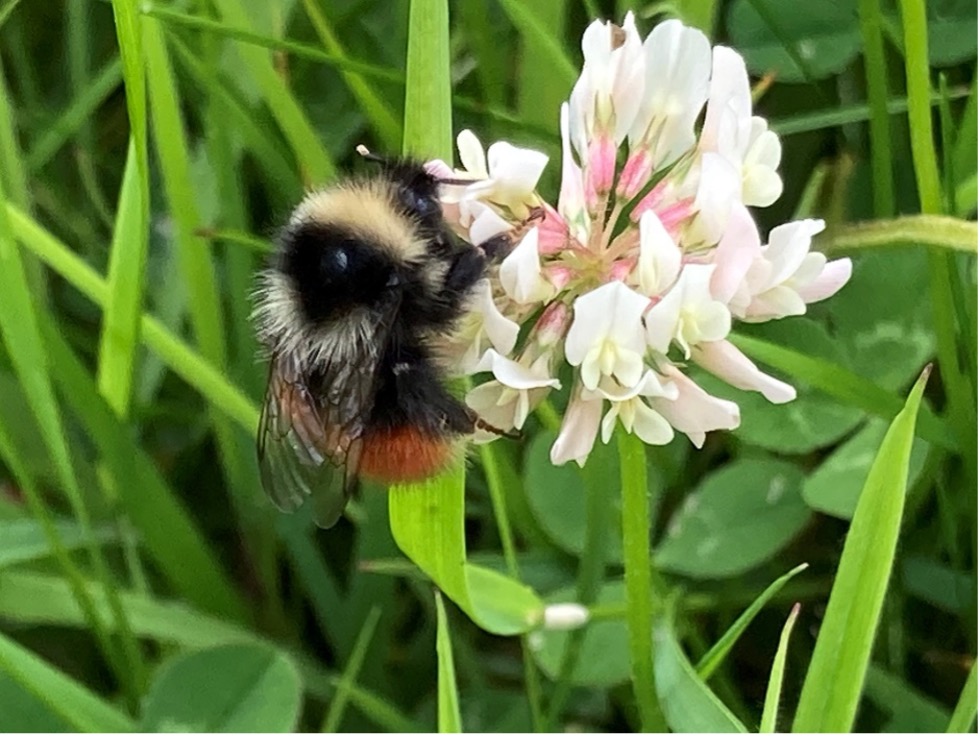
Bilberry bumblebee, Crossgate Crossroads, Lorton. Photo: © Tanya St. Pierre, July 2022
St Cuthbert’s Church
A good place to look for wildlife in Lorton is at St Cuthbert’s church, home to a magnificent old beech tree and more of the famed yew trees of Lorton. Interesting ground flora includes common bistort and pignut. Keep your eye out for tree creeper, song thrush, robin and wren, and in the summer months spotted flycatcher, and common pipistrelle bat.
In recent years, lots of work has been done to make the church grounds more wildlife friendly with the creation of a wildflower meadow area, the planting of native trees and shrubs, and the addition of nest boxes for a range of wildlife including the recent installation of swift boxes in the church tower. The church received ‘Gold’ Eco-Church status in 2021; you can read more about the project here.
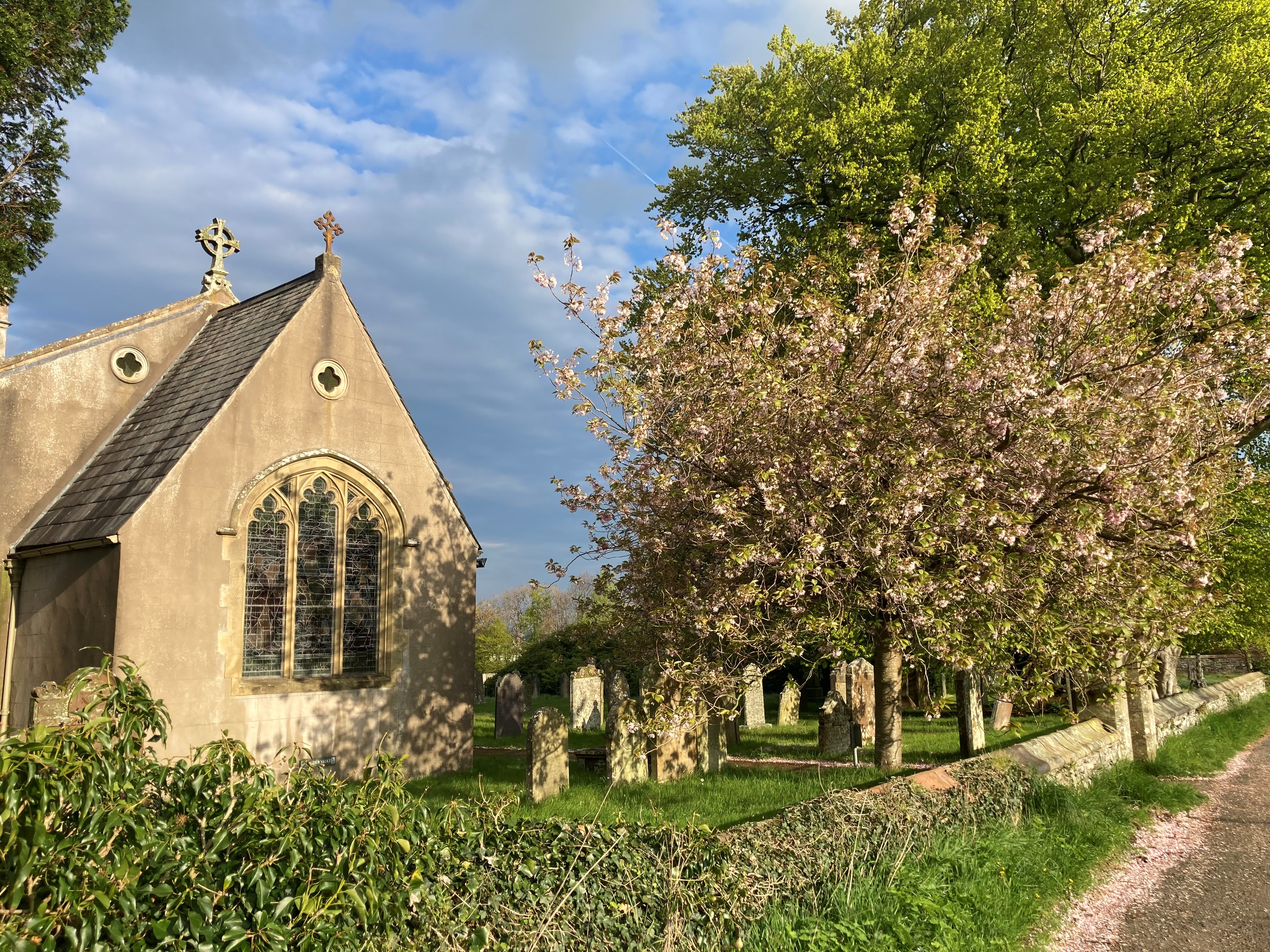
St Cuthbert’s Church, Lorton. Photo: © Tanya St. Pierre, May 2024
Hedgerows
Many of the hedgerows in Lorton Parish are incredibly old, and support some rare and unusual species. Records of the Templeton rose, a rare northern hybrid of wild rose date back to 1924.Whether this species still exists within the quiet back lanes of Lorton requires further investigation. However, northern dog rose, a more unusual wild rose (different to common dog rose) with its half green and half red stem (on the sunlit side) and pink flowers, is easier to identify and readily found within Lorton’s roadside hedgerows. It scrambles alongside other roses such as field rose; and through honeysuckle, ivy, blackthorn, hawthorn, bramble, hazel and holly, making a rich habitat for wildlife.
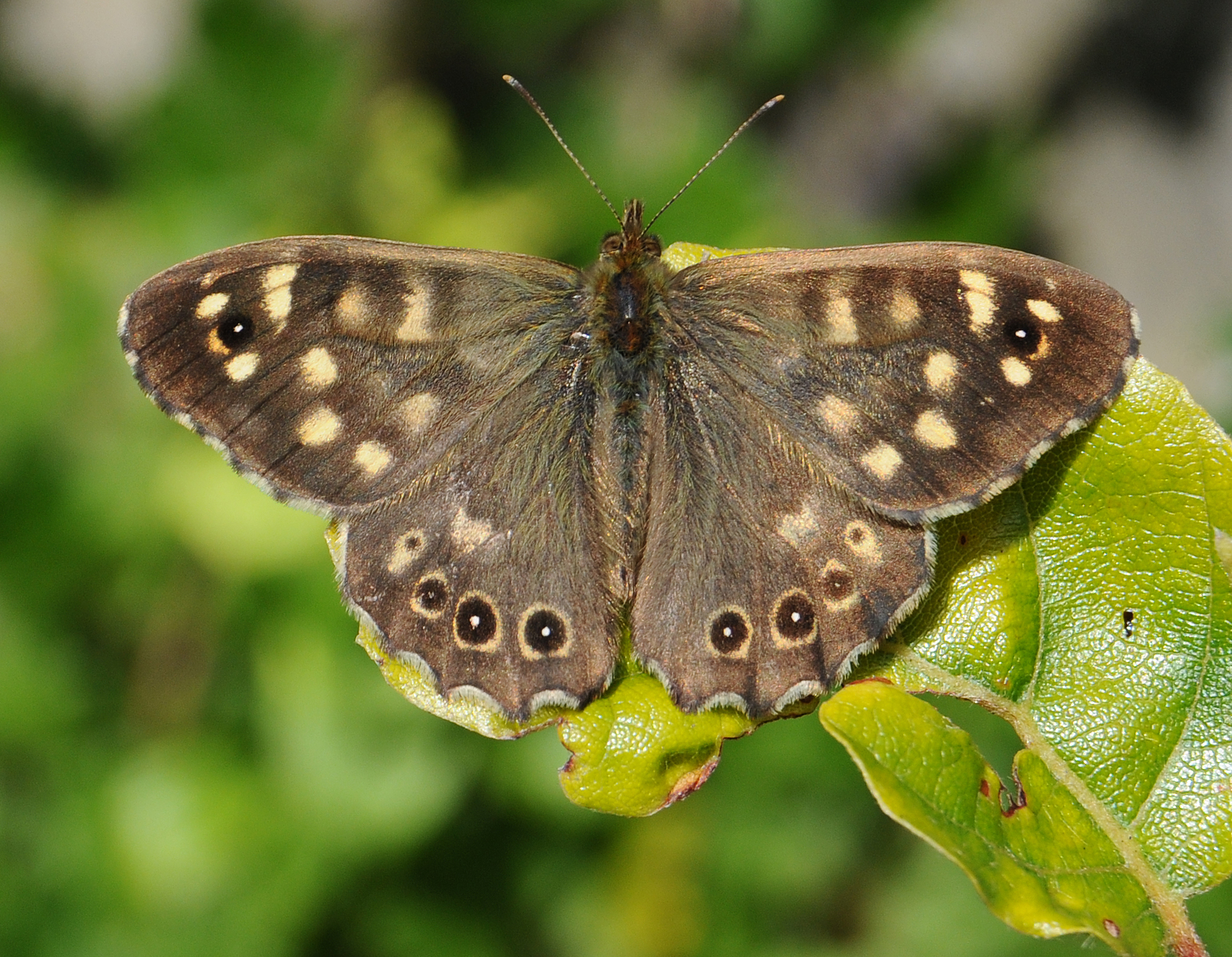
Speckled wood butterfly. © Stuart Medland
Hedgerow and woodland wildflowers are scattered throughout the footpaths and lanes that cross-cross the Parish. Stitchwort, red campion, bluebell, primrose and violet provide a splash of colour in the spring. Dainty harebells inhabit drier banks in summer, alongside spires of foxglove. Knapweed and meadowsweet attract pollinators in their droves. Look out for speckled wood butterfly in shadier areas, and orange tip butterfly, which can often be spotted sipping the nectar of a cuckoo flower, which is also its larval food plant.
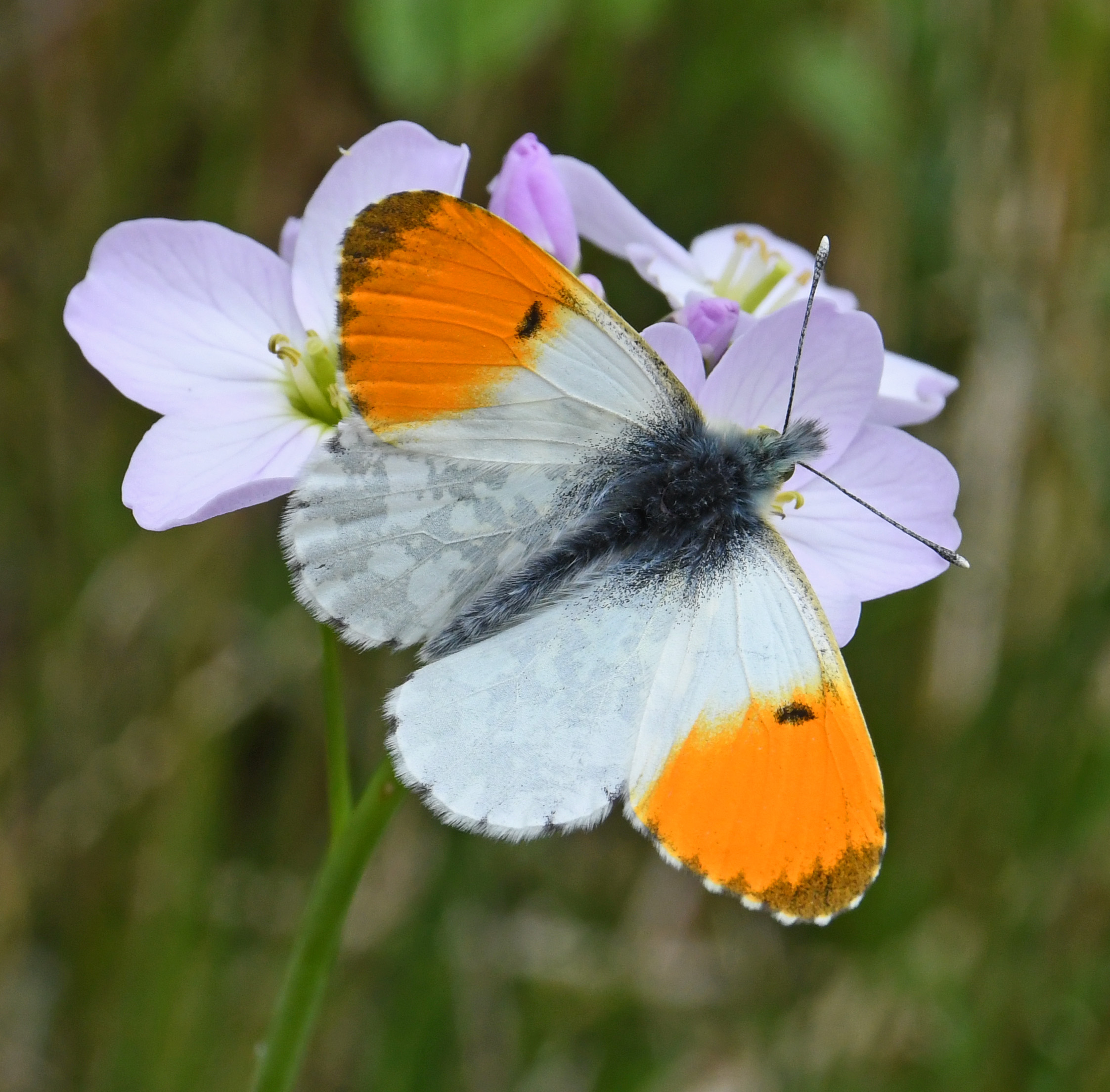
Orange tip butterfly. © Stuart Medland
In 2022, Lorton Parish Council secured funding through Cumbria Wildlife Trust’s ‘Planting for Pollinators’ project to lay the hedge on the Parish playing field, next to the school, with the aim to create a denser hedgerow, ideal for hedgehogs and nesting birds.
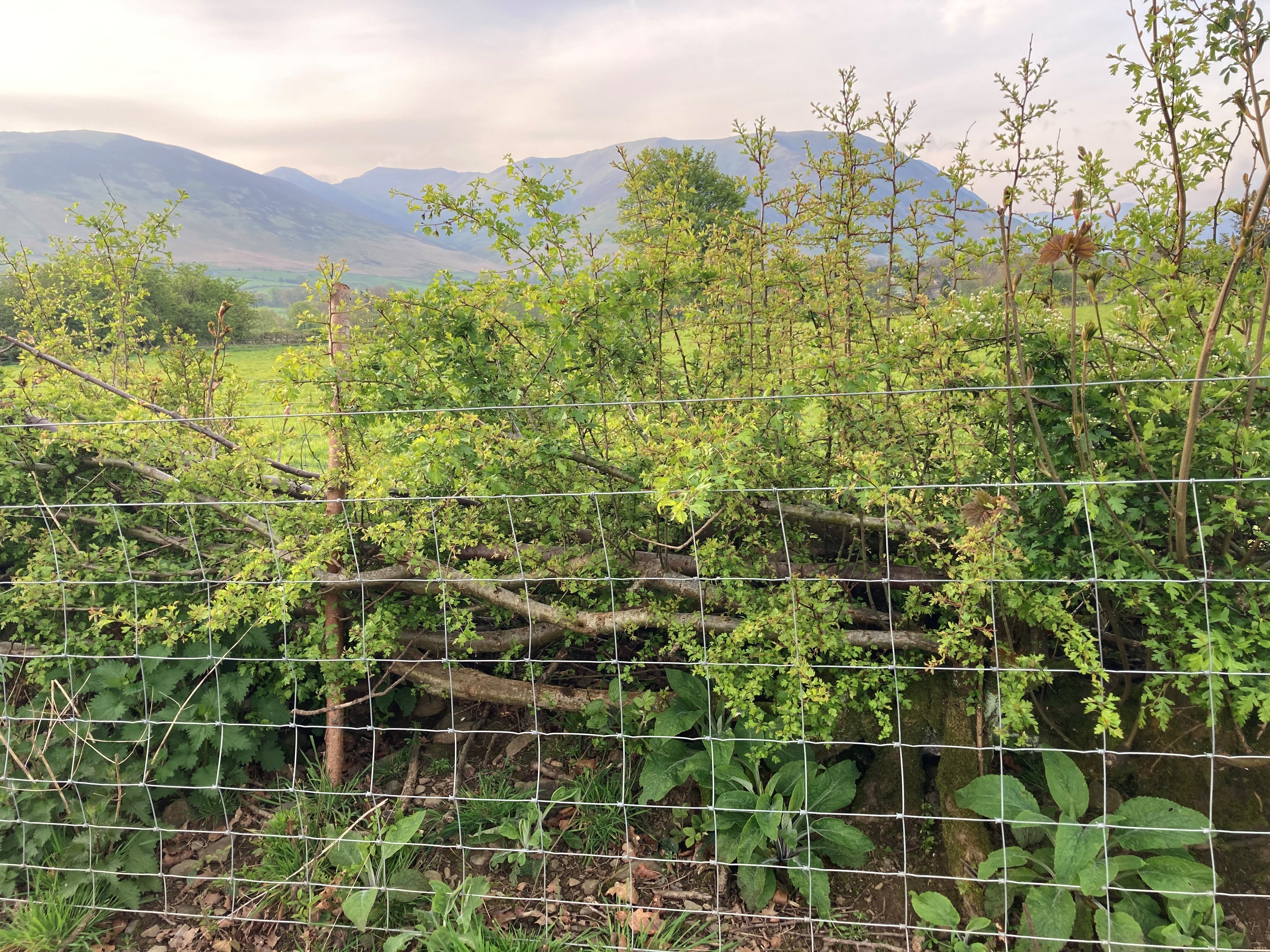
Lorton Parish field wildlife hedge, laid in 2022. Photo © Tanya St. Pierre, April 2024
Scrub
Large areas of bramble, patches of nettle, tussocky grass, deadwood and quieter undisturbed wilder areas of scrub including blackthorn and gorse are vital for supporting an abundance of wildlife in the Parish. Bramble alone supports over 240 insect species, of which 32 rely on it exclusively.
Scrub provides shelter, protection, nest sites and food for a wide variety of insects, amphibians, mammals, and birds, and are important habitats in their own right. Look out for tree sparrow, peacock butterfly, bank vole, whitethroat, yellow hammer, blackcap, and bullfinch, that all can be found in Lorton as a result. In late August and September stands of western gorse, a rarer species of gorse, comes into flower turning the steep hillsides of Lorton, especially Kirkfell, golden.
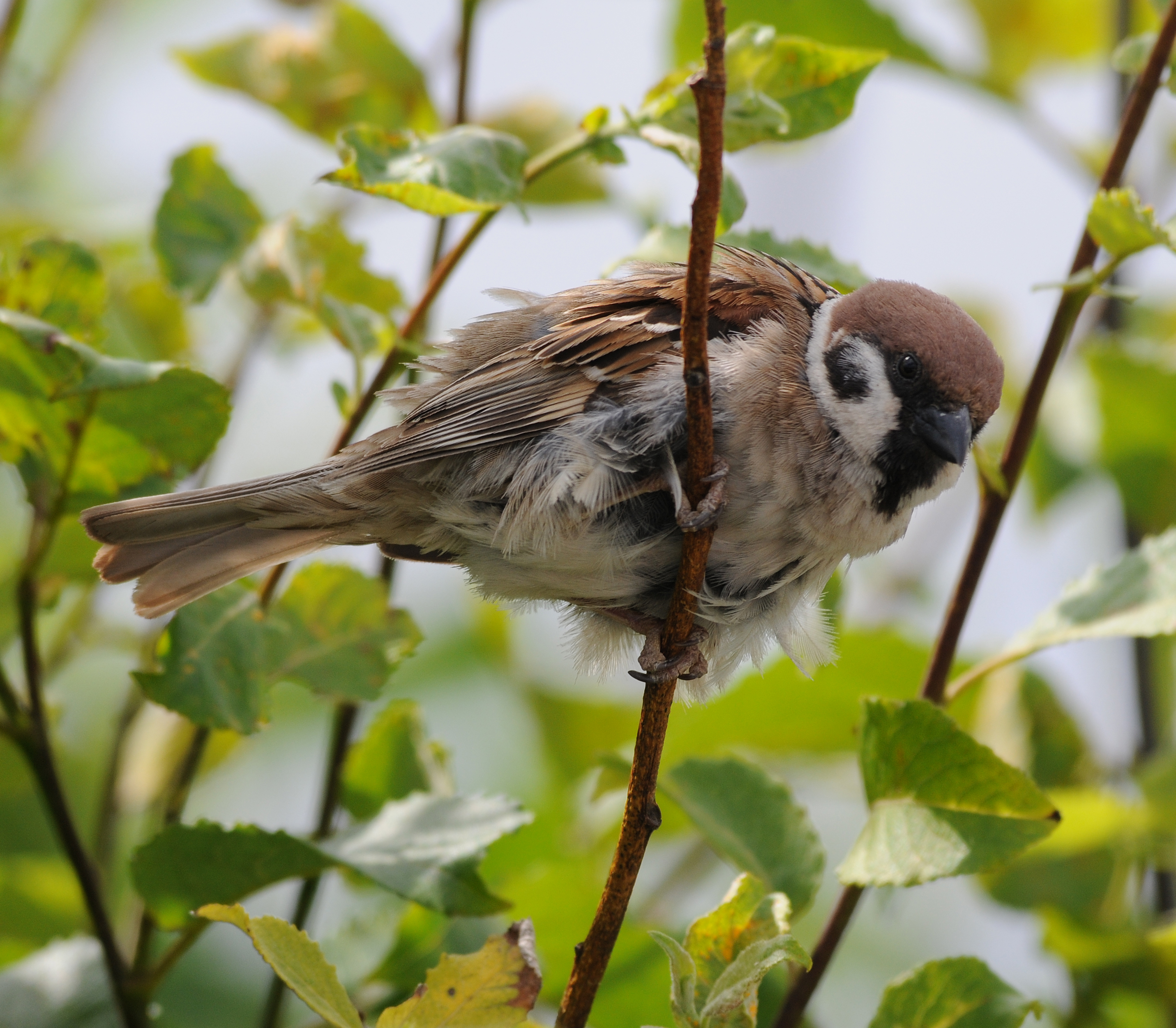
Tree sparrow. © Stuart Medland
Farmland
The meadows, grasslands and pastures are home to rabbit and brown hare, and provide good hunting grounds for a range of raptors including buzzard, kestrel. Barn owls are sometimes seen quartering fields looking for voles and mice. The cattle and sheep dung, and a rich variety of flora within the valley combine to support an abundance of insects, attracting curlew, swallow, swift and house marten, which return to the Parish every year to feed and nest. Melbreak Curlew Recovery project was set up in April 2024, to monitor and protect local populations of curlew. Curlew are faithful to their nest site returning year after year. Once common in areas across the Cumbria, the curlew has suffered catastrophic decline. The project is working with other projects both in Cumbria and nationally, to bring this species back from the brink, so that this iconic bird with its evocative call, can be heard and enjoyed by generations to come.
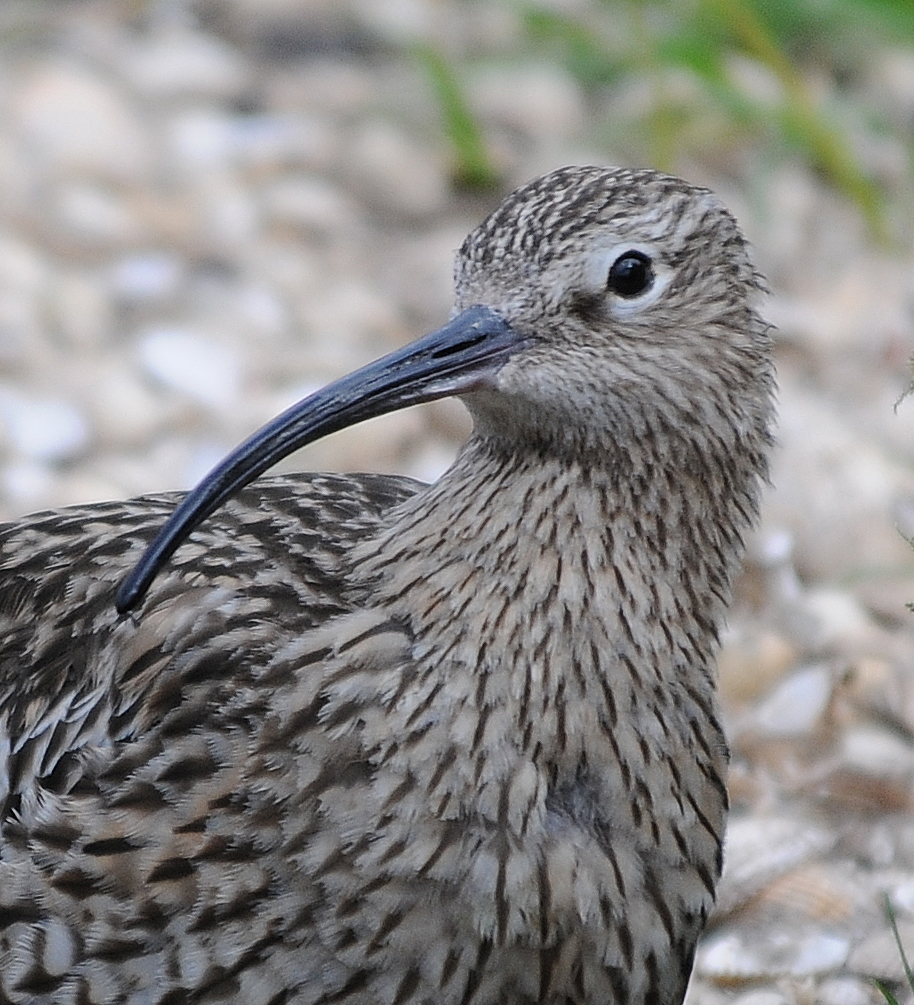
Eurasian curlew. Photo © Stuart Medland
Waterways and the river Cocker
Local farmers, landowners and volunteers have worked closely with West Lakes Rivers Trust in recent years; to re-wet, re-wriggle and slow the flow within the river catchment around Lorton. This not only helps to reduce flooding, it also brings many benefits to wildlife. More information can be found here.
The waterways are important breeding areas for brown trout, eels, minnow, stickleback, stone loach, sea trout and salmon. Heron and dipper, are often spotted from the bridge at Low Lorton, and if you are lucky, you may see the metallic blue streak of a kingfisher flashing past.
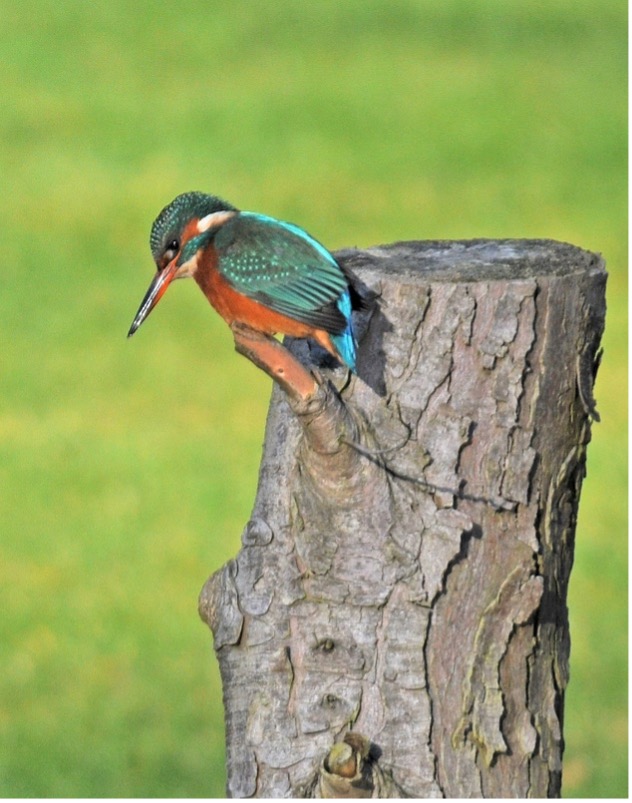
Kingfisher. © Stuart Medland
This page aims to provide you with a flavour of some of the wildlife you may encounter in and around the village of Lorton, there is much more to discover in the cool woodlands and coniferous forests, wetlands, and high fells of the Parish and more widely across the Melbreak area. Information and maps about local history and walks in the area are available from Lorton Village Shop and Cafe, which is open Monday to Saturday 10am to 5pm. Refreshments are also available at the Wheatsheaf pub in Low Lorton. Please do take the time to immerse yourself in the wonder and joy of watching nature!
An interpretation panel celebrating the built heritage of Lorton can be found on the wall of the Yew Tree Hall building, below the swift boxes.
With acknowledgement and thanks to the National Lottery Heritage Fund and Cumberland Council who have provided funding for both the built and natural heritage of Lorton interpretation panels, and for improvements to access within the Parish of Lorton. Special thanks goes to The Melbreak Communities for the hosting of this webpage, also Cumbria Wildlife Trust for their support with this project, and to all the local residents and councillors who have contributed their photos, illustrations, time and ideas. Thank you.
Tanya St. Pierre, Lorton Parish Councillor, May 2024

 The Melbreak Communities