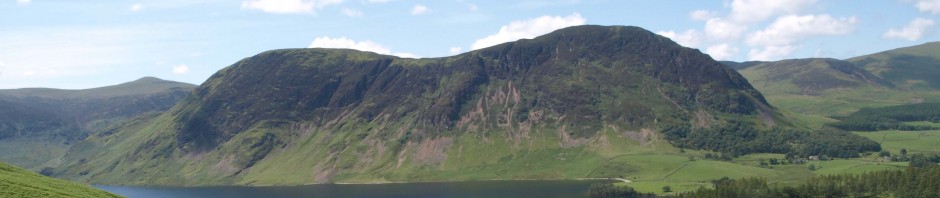
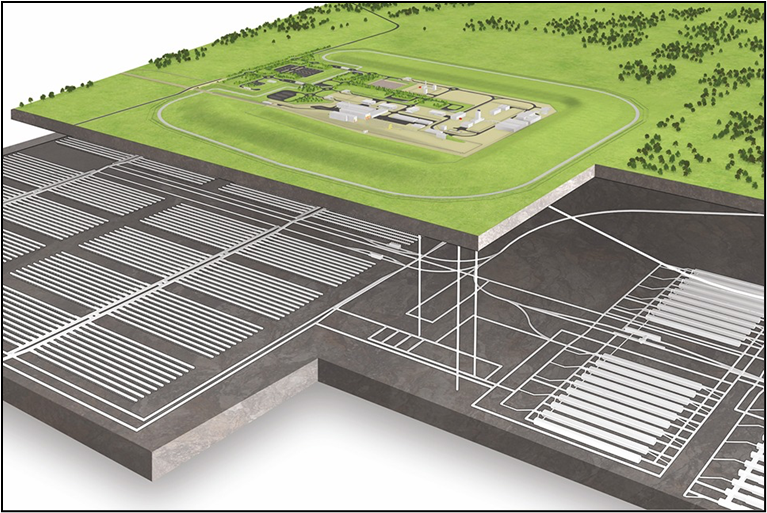
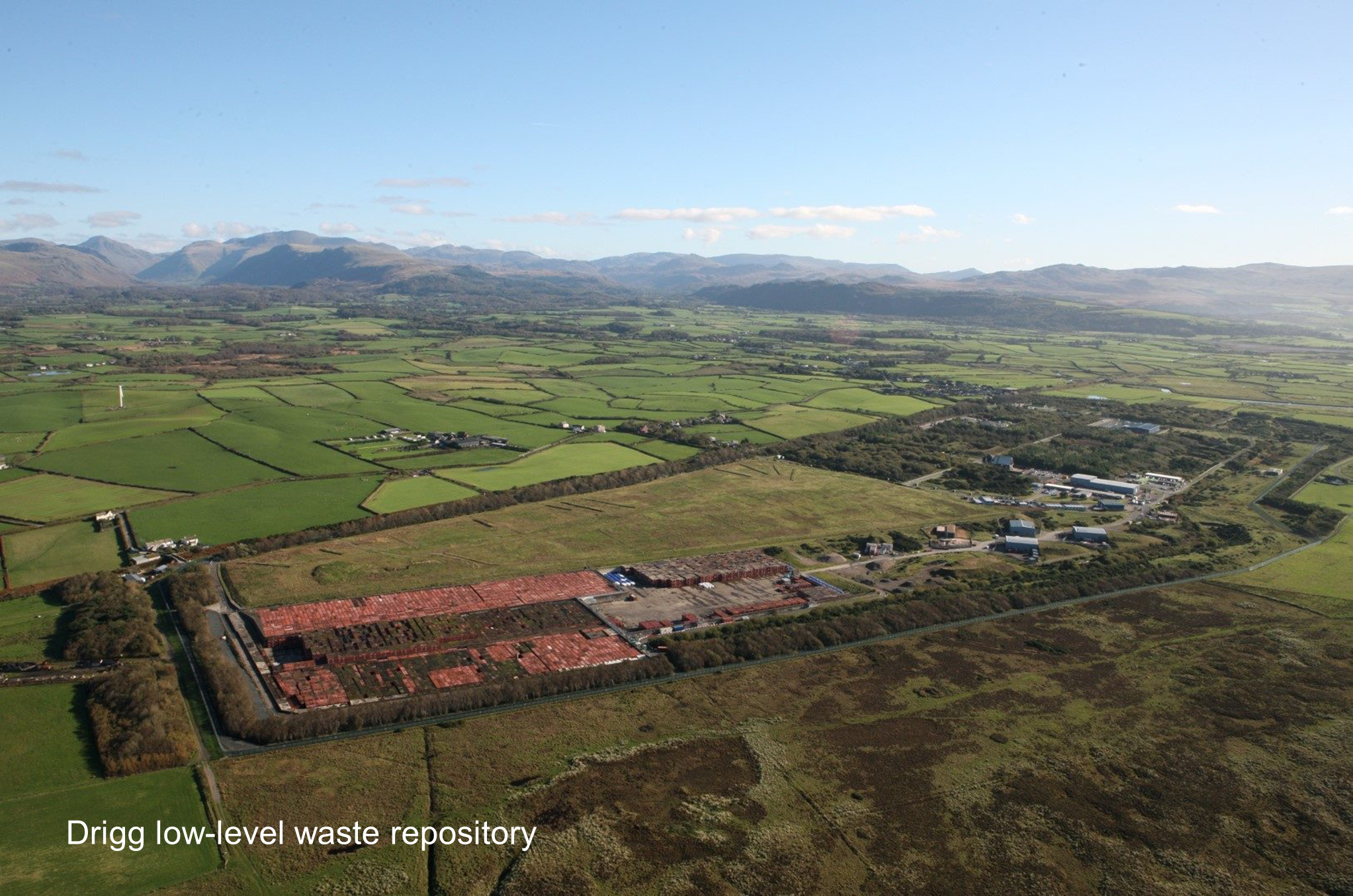
This subject may not seem too relevant to the MC area, but Sellafield, where much of the UK’s high level nuclear waste is stored, is only a short distance away. It is generally accepted that the best option for dealing with high-level nuclear waste is storage underground in a so-called geological disposal facility (GDF), see generic illustration above. The UK has been looking for a suitable location for a GDF for some time – most of the potential GDF sites that have been investigated so far have been in Cumbria. There is already a low-level nuclear waste repository at Drigg (see photo). Note that this concept is not supported by the Scottish government, so Scotland is not included in this search.
After failure of the previous programme to find a suitable GDF location (when the former Cumbria County Council voted in 2013 not to continue to look in the former Allerdale and Copeland Borough areas), it was back to the drawing board to find a new way forward. The new process is being managed by Nuclear Waste Services (NWS) within the Nuclear Decommissioning Authority. You can find more information on how this latest approach works here, but the key element is for a local community to propose an area for consideration. Over the first 5 years to mid-2024, four community areas in the UK have come forward – three in Cumbria and one in Lincolnshire.
Following initial investigations, one of these (Allerdale in Cumbria) withdrew from the process in 2023 as it was concluded that there would be inadequate rock capacity for a GDF in its area. At all three remaining areas, the focus of investigations for the GDF is under the adjacent sea. The two Cumbrian areas are in mid Copeland and south Copeland, where a marine geophysical survey of the geology beneath the seabed off the coast here was carried out in 2022 and this has indicated potentially suitable geology for a GDF (according to the 2024 NWS Annual Report). Work at the Lincolnshire site has led to a similar conclusion.
The costs involved in this scheme are enormous. It is estimated that the cost of a GDF constructed by the 2050s would be about £12 billion (in 2018 prices) compared to ongoing costs of about £70M each year for simply managing storage of this waste as is done now. Money is also given annually to local communities engaged in the GDF search process. The next key decision is about where to conduct the first deep borehole investigation at one of the three community areas that have come forward so far. Volunteering to be part of this programme to find a GDF site is still open to everywhere else in England and Wales.
Sources of information
Mid Copeland Community Partnership
South Copeland Community Partnership
Leslie Webb, August 2024
 The Melbreak Communities
The Allerdale Community Partnership has just announced that it will not be proceeding any further with a search for a GDF within its area. The reason is that it is unlikely that there would be enough rock capacity for the GDF within its area. The searches in Mid and South Copeland continue.